


Four-Color Caddis Sampler — 16 Flies
Four-Color Caddis Sampler — 16 Flies
Couldn't load pickup availability
Reviews across our store
252 reviews
Trusted by over 5,000 anglers
Stock availability: In stock
Shipping information
Shipping information
All orders ship via USPS from our shop in the United States.
Free shipping on orders of $65 or more (lower 48 US states).
Tracking is emailed once your order ships, usually within 1–2 business days of purchase.
Expedited shipping is available at checkout for US customers.
International shipping rates are calculated at checkout. Free shipping does not apply outside the US.
Ask a question
Ask a question
Learn one dry fly before filling another box. This 16-fly Elk Hair Caddis selection gives you Brown, Olive, Black and tan in eight exact color-and-size combinations, with two of each. Fish a natural drift, try a controlled skate when insects are moving on the surface, and replace the flies you use.
- 16 Elk Hair Caddis; four colors and eight combinations, two of each.
- Brown #14/#16; Olive #16/#18; Black #16/#18; tan #14/#18.
- A guide to choosing size, observing surface activity, and correcting drag.
- Two single-fly rigs: a natural drift and a controlled surface skate.
- Boxed and loose-refill formats with the same sixteen flies.
- Exact identification photographs and links for individual replacements.
A caddis dry gives you more to learn than which color to tie on. Where it lands, how it crosses a current seam, and whether the fish are eating adults or emerging insects all affect the next decision. This sampler keeps the pattern familiar while giving you clear choices in size and body color.
Brown and tan include a larger #14 option. Brown also includes #16, while tan's smaller option is #18. Olive and Black each come in #16 and #18, making it easy to change size while keeping the same color. Every combination has a second fly, and every fly appears in the contents guide.
Start with the natural-drift lesson. Learn to keep the fly moving with its lane of current instead of pulling a wake unintentionally. Then use the controlled-skate lesson when you can see adult insects moving across the surface. The guide also explains the limit of this box: trout chasing emerging insects below the surface may call for a pupa or emerger that is not included here.
Choose 16 flies + box for the boxed selection, or 16-fly refill — no box to restock a box you already own. Both formats contain the exact recipe shown above. Rod, reel, line, leader, tippet and floatant are not included. Shipping is calculated at checkout; eligible orders to the contiguous 48 United States receive free standard shipping at $65, subject to checkout eligibility.
Questions about this selection
Which sizes come in each color? Brown #14 and #16; Olive #16 and #18; Black #16 and #18; tan #14 and #18. You receive two of each combination. This is not every color in every size.
Are these eight different patterns? No. They are eight color-and-size combinations of Elk Hair Caddis, an adult-caddis dry pattern.
What should I tie on first? With no observed insect to match, Brown #16 is this guide's starting point for a short prospecting trial. Watch the drift before changing color. It is a practical starting choice, not a claim that Brown always catches more fish.
Does a splashy rise mean I should fish a dry? Not always. Look for a fish actually taking an insect on the surface. Caddis emerging through the film can also produce splashes; the lesson explains when to change stages.
Can I add a weighted nymph below it? The included rigs use one dry. This sampler is not sold with a tested dropper-weight rating. Use a separately verified dry-dropper setup if that is your plan.
Can I refill just one color and size? Yes. The refill guide links to each existing Single variant. Choose the complete sixteen-fly refill only when you want the whole selection again.
Exact contents
Both formats contain the same 16 flies. Choose the boxed format for a fly box, or the loose refill if you already have one.
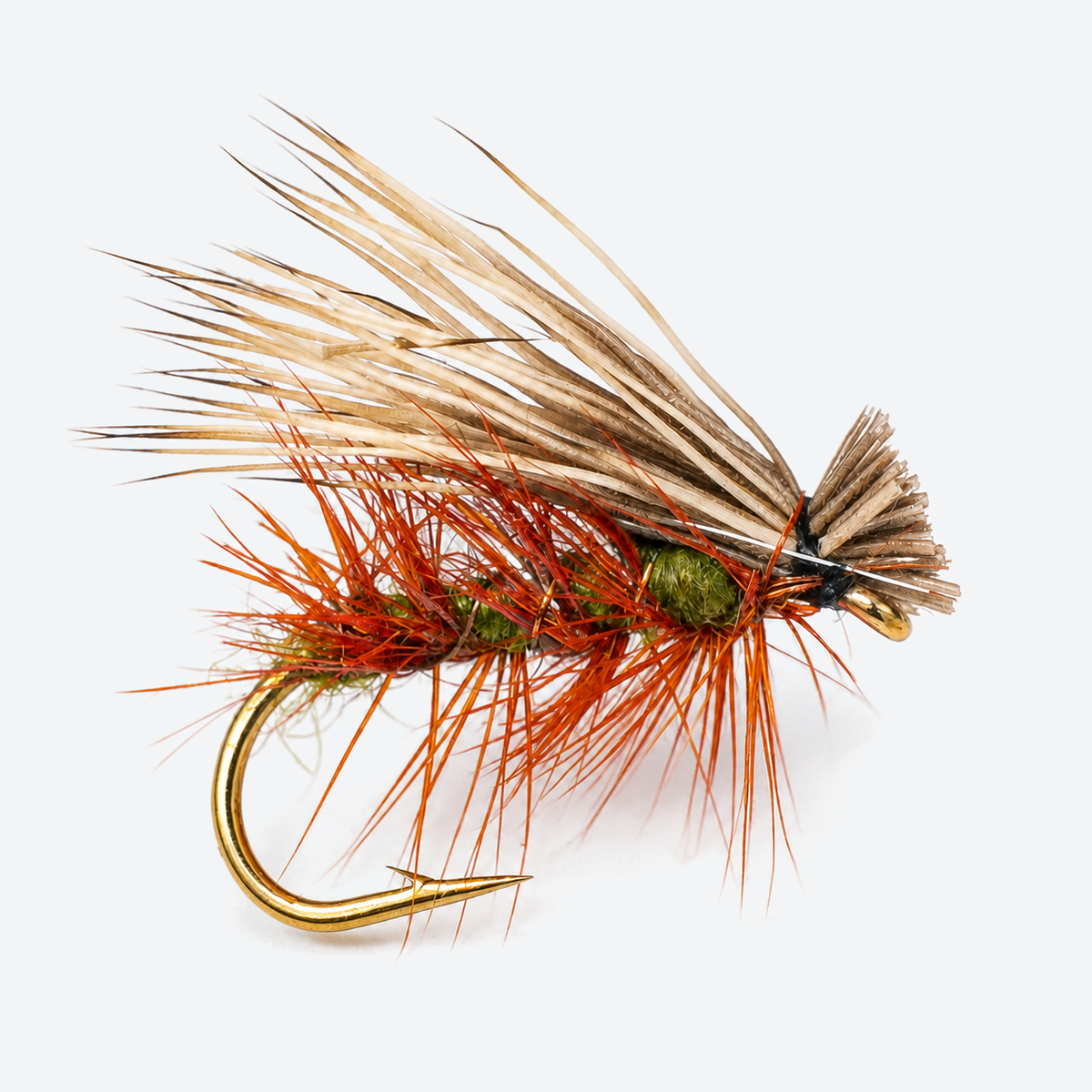
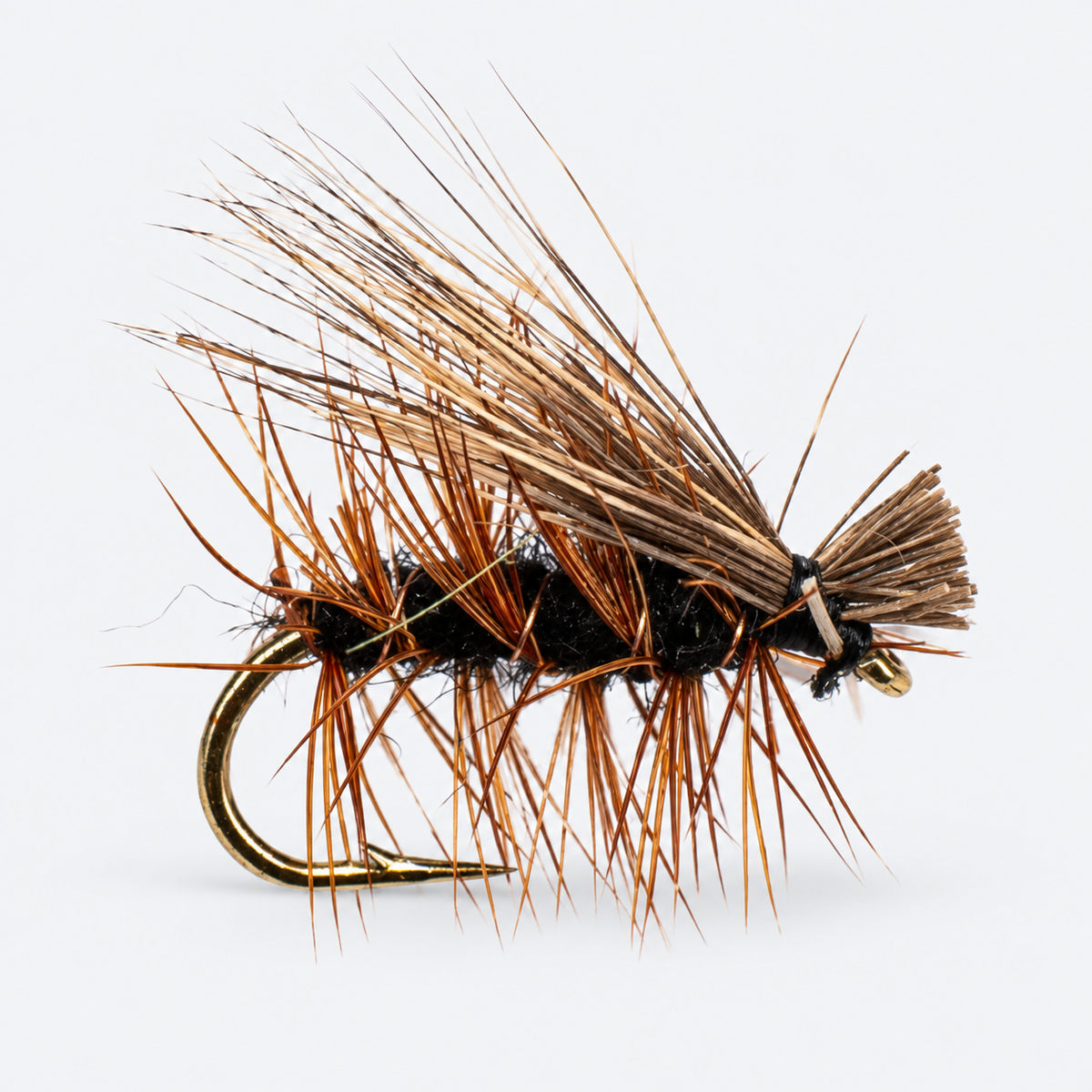
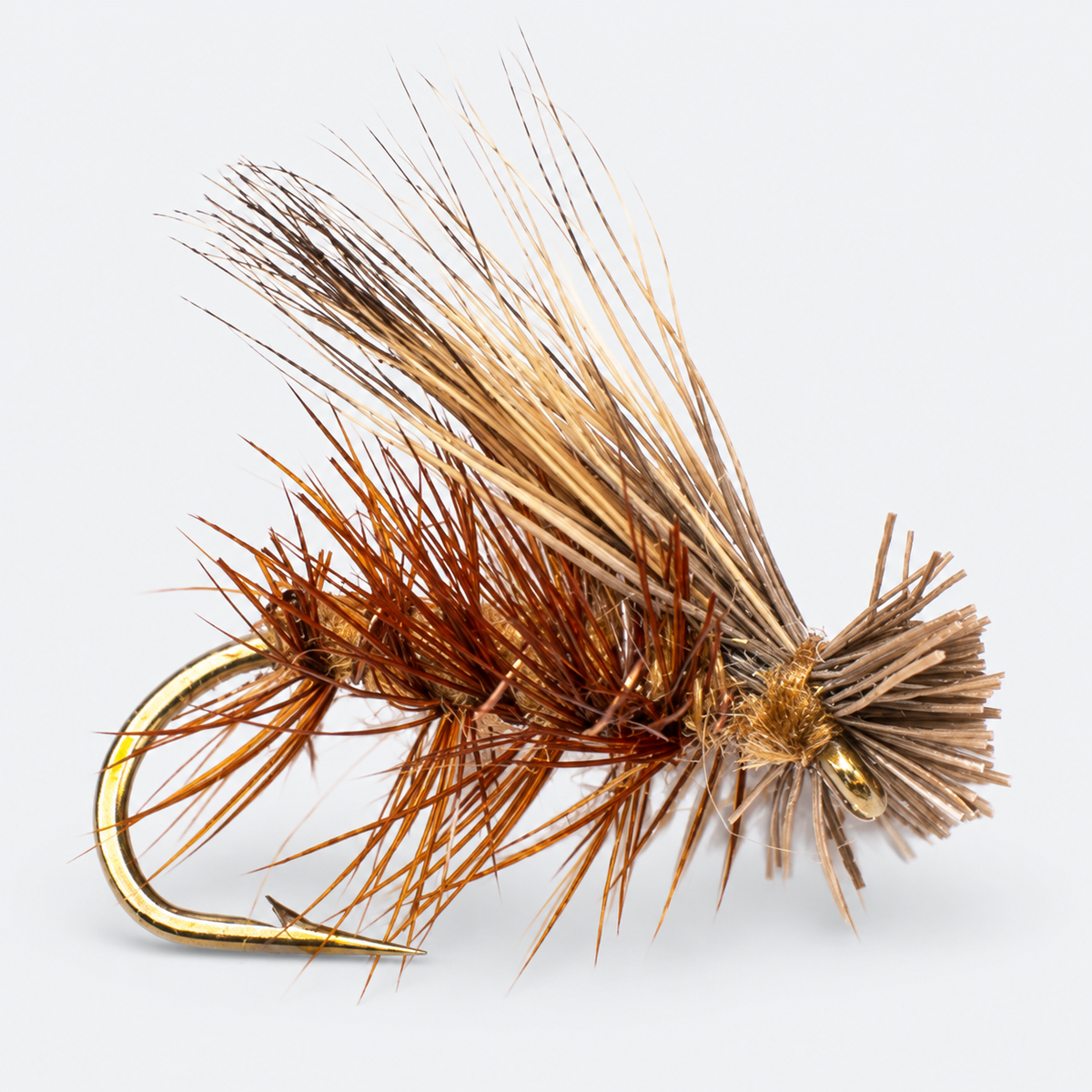
Photo guide: The gallery and component pictures are identification examples from our individual-fly listings, not a photograph of the assembled box. Photographs are not shown at a common physical scale. The labels below specify the included sizes and quantities.
| Fly | Color | Size | Flies included |
|---|---|---|---|
| Elk Hair Caddis | Brown | #14 | 2 |
| Elk Hair Caddis | Brown | #16 | 2 |
| Elk Hair Caddis | Olive | #16 | 2 |
| Elk Hair Caddis | Olive | #18 | 2 |
| Elk Hair Caddis | Black | #16 | 2 |
| Elk Hair Caddis | Black | #18 | 2 |
| Elk Hair Caddis | tan | #14 | 2 |
| Elk Hair Caddis | tan | #18 | 2 |


How to fish this selection
One Caddis, Two Surface Presentations
Start with observation, then a short trial
If nothing is rising and you want to fish this sampler, tie on Elk Hair Caddis, Brown #16 and begin with Rig 1. Work a reachable current seam or pocket where you can see the fly. Give each promising lane several clean drifts, then cover the next lane. Brown #16 is a repeatable starting point, not evidence that caddis are hatching or that trout will rise.
Watch an individual fish when possible. A natural insect visibly disappearing into its mouth is stronger evidence for an adult dry than a ring by itself. Repeated rises beneath untouched surface insects, or small mothlike adults lifting away from a splash, can indicate fish chasing emergers. A bulge beneath your fly may be a refusal, not a missed take. These are clues to combine, not a code that identifies every rise. If the evidence points below the film, use an appropriate pupa or emerger from outside this dry-only sampler. Tom Rosenbauer on observed feeding stages.
Choose the closest size and body color to an insect you can inspect. The fly's hair wing is not its body color; use the labeled identification photos to distinguish Brown from tan. Hook numbers rank the nominal sizes within the selection, but do not substitute for looking at actual body length.
Starting rig 1 — Dead-drift a single caddis
Connect floating line to a 9-foot tapered 5X nylon leader using its factory loops. Add 18 finished inches of 5X nylon with a triple surgeon’s knot; nominal diameter is 0.006 inch / 0.152 mm. Tie Elk Hair Caddis, Brown #16 with a five-turn clinch. Use one fly, with no added weight or indicator. The nominal finished leader is 10 feet 6 inches. Leave extra material for tying and pull-test each wetted, seated knot.
For the triple surgeon’s knot, overlap the ends, form a doubled loop, pass the free tippet and accompanying leader tag through three times, wet and seat while controlling all four ends. For the clinch, pass through the eye, wrap five times around the standing line, return through the small opening beside the eye, wet and seat. Orvis knot demonstration.
Make a short upstream-quartering cast, landing upstream of the feeding position with useful slack. About two feet upstream is one starting example, not a rule for every current. Follow the fly without towing it. Reposition or make an early mend before a faster seam pulls the fly into a V-shaped wake. Slack-line casting.
Starting rig 2 — A controlled skate
Try this separate presentation when you observe adults moving on the surface and fish pursuing them. Connect floating line to a 7-foot-6-inch tapered 4X nylon leader, then add 18 finished inches of 4X with a triple surgeon’s knot. Nominal 4X diameter is 0.007 inch / 0.178 mm. Tie Elk Hair Caddis, tan #14 with a five-turn clinch. The nominal total is nine feet, with no weight, indicator or second fly.
Keep the cast short, raise the rod to reduce line on conflicting currents, and guide the fly across and slightly downstream with a small wake. Adjust speed to what you observe; pause or return to a dead drift when fish reject the movement. Deliberate skating is a different experiment from unnoticed drag. Brian McGeehan on skating caddis.
What to change after several unproductive drifts
- Fix the path. Confirm the fly actually reaches the feeding lane. Shorten the cast or change position to cross fewer conflicting currents. A different color will not fix a fly pulled out of the lane.
- Fix its condition and presentation. Inspect the hook, knot and tippet. Dry or replace a soaked fly. With Rig 1, eliminate unintended wake; with Rig 2, reduce the movement and compare a stationary drift.
- Match size. Inspect the natural if possible. Brown permits #14 → #16; Olive or Black permit #16 → #18. tan jumps from #14 to #18.
- Then compare color. At #16 compare Brown, Olive and Black; at #18 compare Olive, Black and tan. Change one factor at a time when the recipe allows it. Do not assign a guaranteed weather condition to each color.
- Refine the terminal rig only when needed. If a #18 is still being pulled unnaturally after fixing the cast, replace Rig 1's terminal 18 inches with 6X nylon, nominal 0.005 inch / 0.127 mm, using the same knots. Finer tippet is a conditional adjustment, not the automatic answer to pressured fish. Check strength and abrasion against the fish and cover; keep the stronger tippet when it presents well.
- Change stage or water. Repeated below-film feeding calls for a suitable emerger or pupa outside this sampler. With no response and no surface evidence, move after covering the useful lanes or switch to a subsurface selection. Do not cycle through all sixteen dries merely to keep this box in use.
Related water guides
For a local trip, read our Lower Provo guide and compare its dated caddis notes with the actual insects. The sampler covers adults in its listed sizes; it is not a complete hatch calendar.
Planning a caddis trip? Our Weber River guide separates the seasonal calendar from current conditions and explains when the reported caddis sizes are smaller than this sampler.
Our Green River below Flaming Gorge guide explains when an adult-caddis selection fits the summer calendar and when a different insect or smaller size is needed.
Planning a Jackson Hole trip? Our Snake River guide explains the seasonal context, access checks and when this adult-caddis selection fits. It is not a complete Snake hatch assortment.
Refill your selection
For the complete recipe without another box, choose the loose refill format at the top of this page. To replace only a few flies, use the exact individual-fly links in the contents table and choose your own quantities. Each option is a separate purchase; you do not need to add the complete refill and its individual components together.

Customers also bought
-
152-Piece Premium Fly Fishing Kit with Fly Box
Regular price $139.99 USDRegular price -
27-Pack Woolly Bugger Assortment
Regular price $39.99 USDRegular price -
12-Pack Sexy Walt's Worm
Regular price $18.99 USDRegular price -
12-Pack Zebra Midge
Regular price $16.99 USDRegular price


