


Caddis: Below, Through & On the Surface — 18 Flies
Caddis: Below, Through & On the Surface — 18 Flies
Couldn't load pickup availability
Reviews across our store
252 reviews
Trusted by over 5,000 anglers
Stock availability: Out of stock
Shipping information
Shipping information
All orders ship via USPS from our shop in the United States.
Free shipping on orders of $65 or more (lower 48 US states).
Tracking is emailed once your order ships, usually within 1–2 business days of purchase.
Expedited shipping is available at checkout for US customers.
International shipping rates are calculated at checkout. Free shipping does not apply outside the US.
Ask a question
Ask a question
A caddis day can begin well below the surface. This eighteen-fly selection gives you six larvae, six pupae and six adult dries, with a guide to choosing a stage and changing the presentation. Start below, watch what the trout actually take, and move toward the surface when the evidence calls for it.
- Six Caddis Larva: three tan #14 and three Olive #14.
- Six Caddis Pupa #14, the catalog's single listed color configuration.
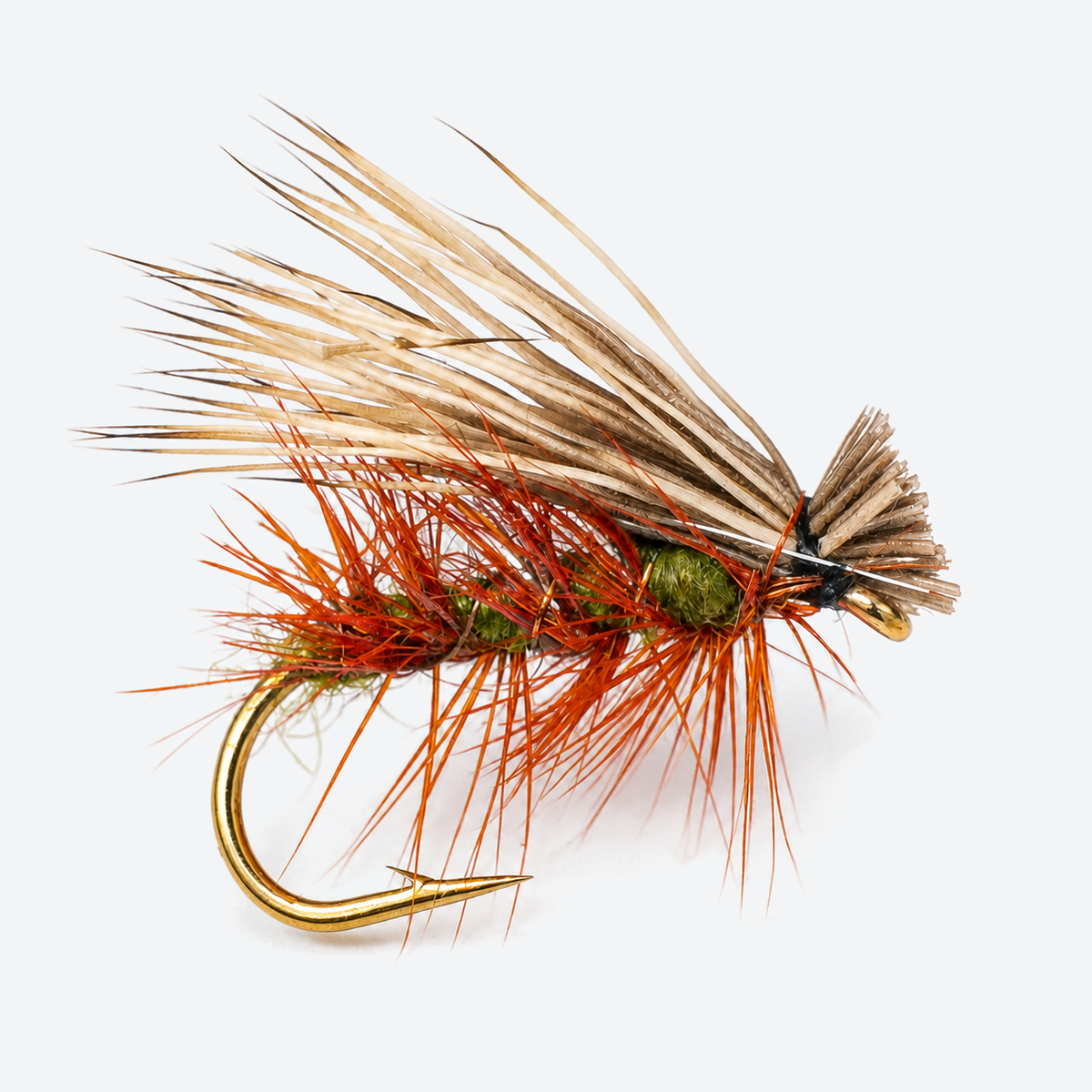
- Six Elk Hair Caddis: two Brown #16, two Black #16 and two Olive #18.
- Two complete starting rigs: a weighted indicator rig and a single adult dry.
- Instructions for moving the pupa higher without hanging it beneath an untested dry.
- Boxed and loose-refill formats with the same eighteen flies.
This box is organized by where the insect is available to trout. Caddis Larva gives you tan and Olive #14 choices for a subsurface drift. Caddis Pupa #14 gives you a transition-stage option when fish are feeding higher or chasing emerging insects. Elk Hair Caddis in Brown #16, Black #16 and Olive #18 covers the adult-dry part of the lesson.
The contents are deliberately limited. You get three stage categories with enough repeats to keep fishing a useful choice, not a different fly in every slot. The guide explains how to adjust depth before changing patterns, how to separate a dry-fly opportunity from a below-surface rise, and when the selection does not match what is happening.
No single caddis box covers every species or size. The larvae and pupae here are #14, while the adults are #16 and #18. Compare the actual insects and fish behavior before choosing. If trout want a much smaller pupa or another insect, make that change rather than forcing this recipe into the situation.
Choose 18 flies + box or 18-fly refill — no box. The refill contains the same recipe without a fly box. Rod, reel, line, leader, tippet, indicator, split shot and floatant are not included. Shipping is calculated at checkout; eligible lower-48 U.S. orders qualify for free shipping at $65 or more, subject to checkout eligibility.
Questions about this selection
What should I start with when nothing is rising? Start this lesson with Caddis Larva, Olive #14, on the indicator rig. Establish a controlled drift and useful depth. It is a starting method for this selection, not evidence that trout are currently eating caddis.
Is the pupa meant to float? It is a subsurface/emerger pattern. Adjust its presentation through the water column; the guide does not promise that this particular fly suspends in the surface film unaided.
Can I hang the pupa below an Elk Hair Caddis? The included lesson uses separate rigs. A #16 dry has not been tested to support this #14 pupa, so this product makes no such claim.
Does a splash mean the fish ate an adult? It can, but caddis emergence also creates splashy activity. Look for insects actually being taken at the surface and compare several feeding events.
How is this different from the Four-Color Caddis Sampler? This selection covers larvae, pupae and adults. The sampler contains only Elk Hair Caddis and offers more adult color-and-size combinations.
Can I replace only the flies I lose? Yes. The component guide links to exact Single variants; the complete refill rebuilds all eighteen flies.
Exact contents
Both formats contain the same 18 flies. Choose the boxed format for a fly box, or the loose refill if you already have one.
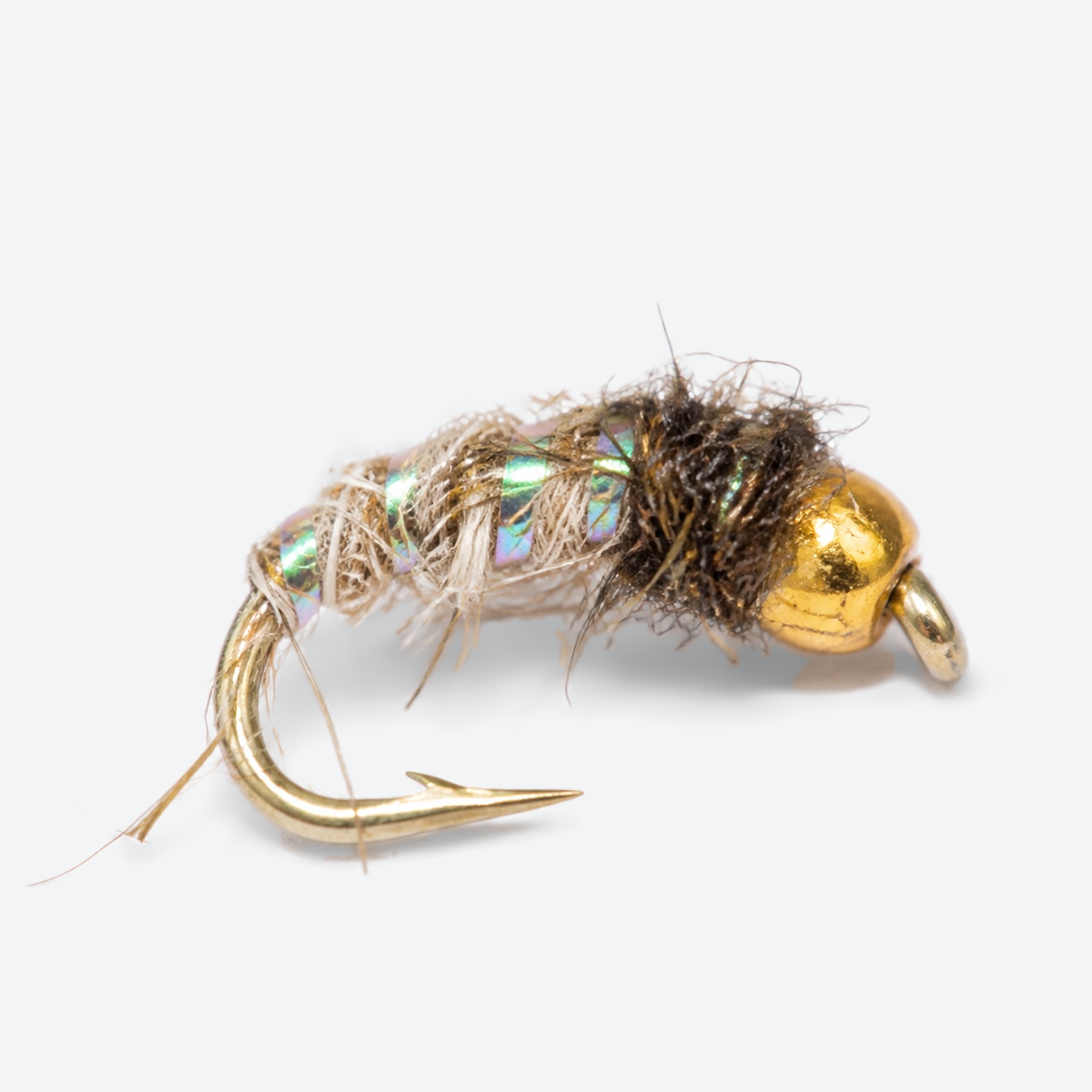
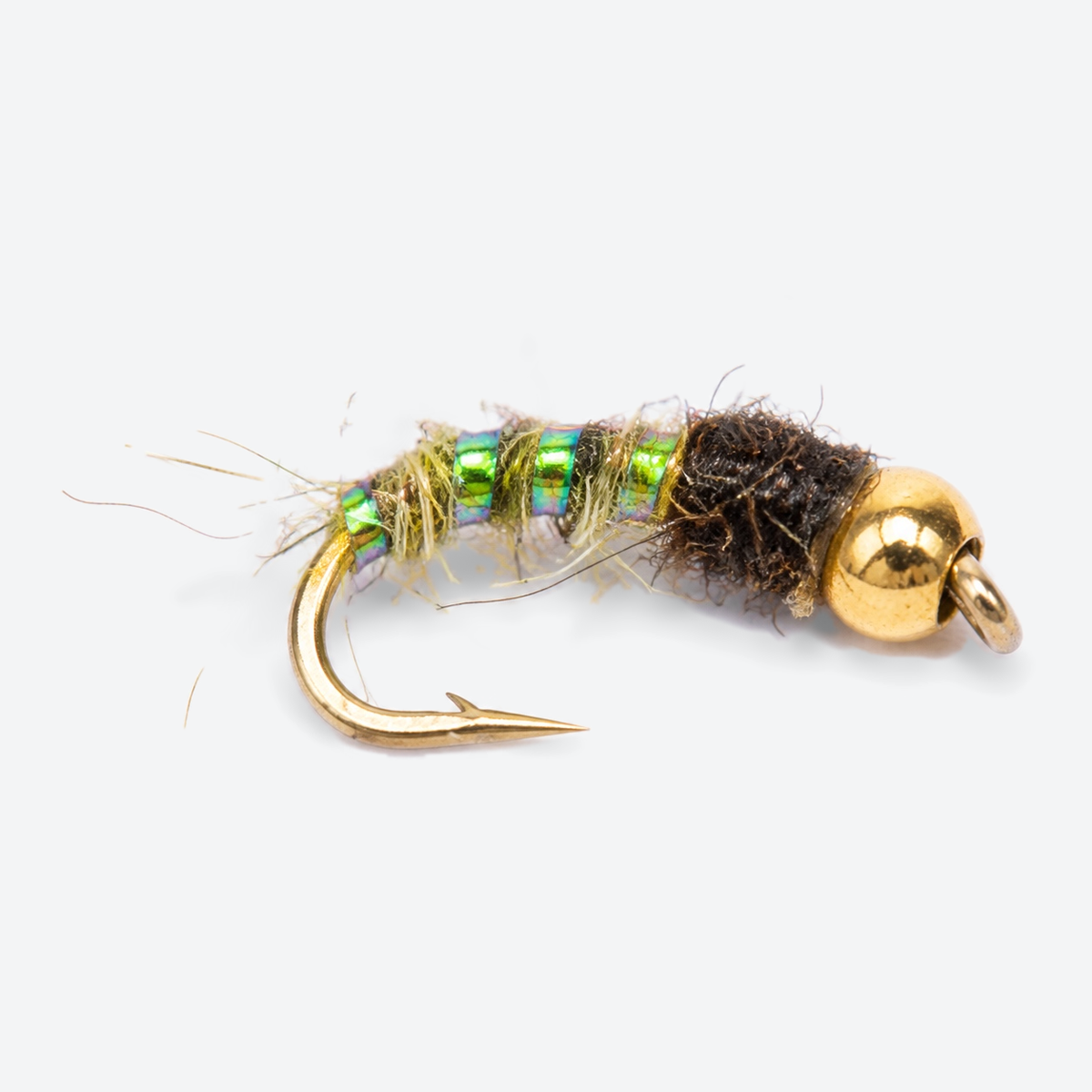
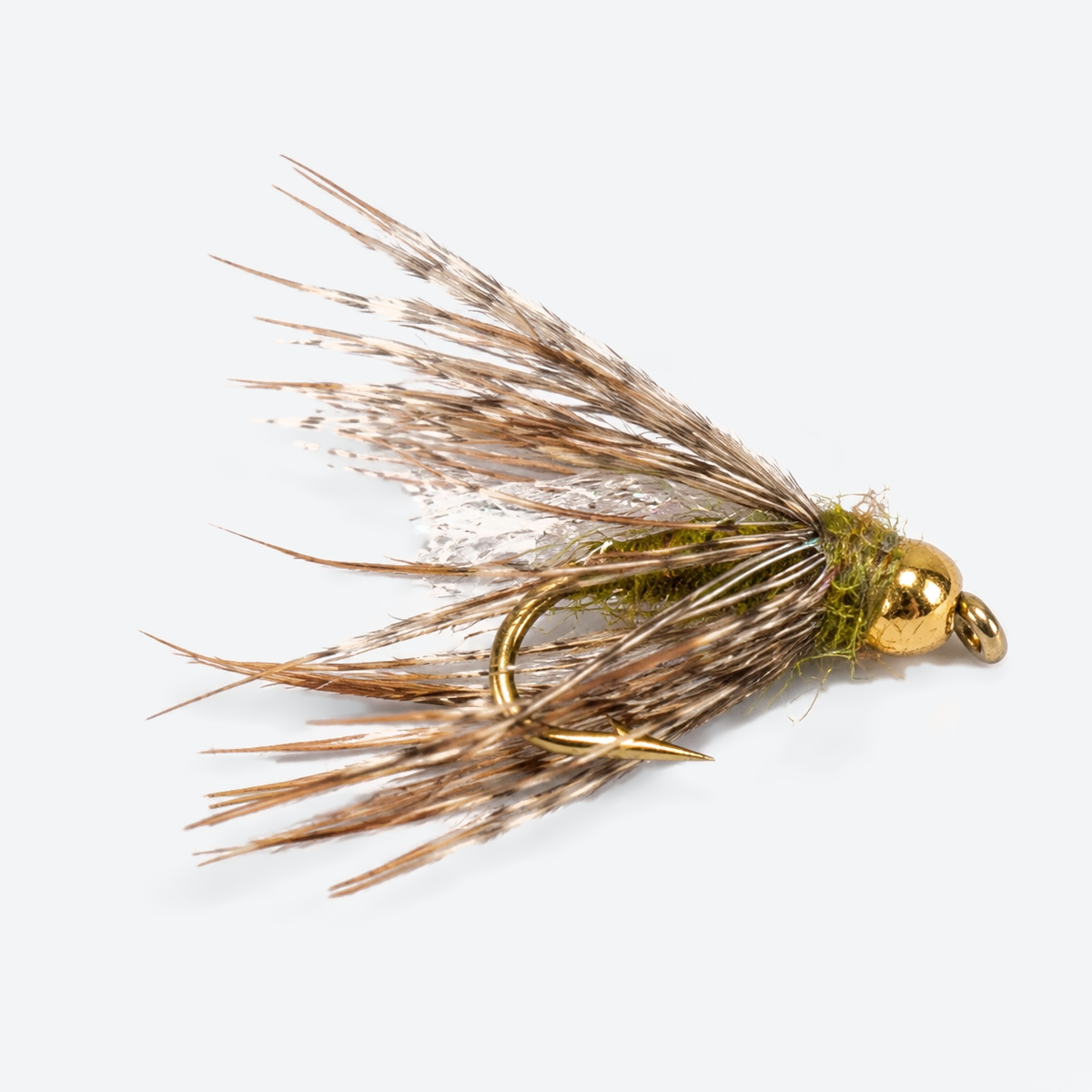
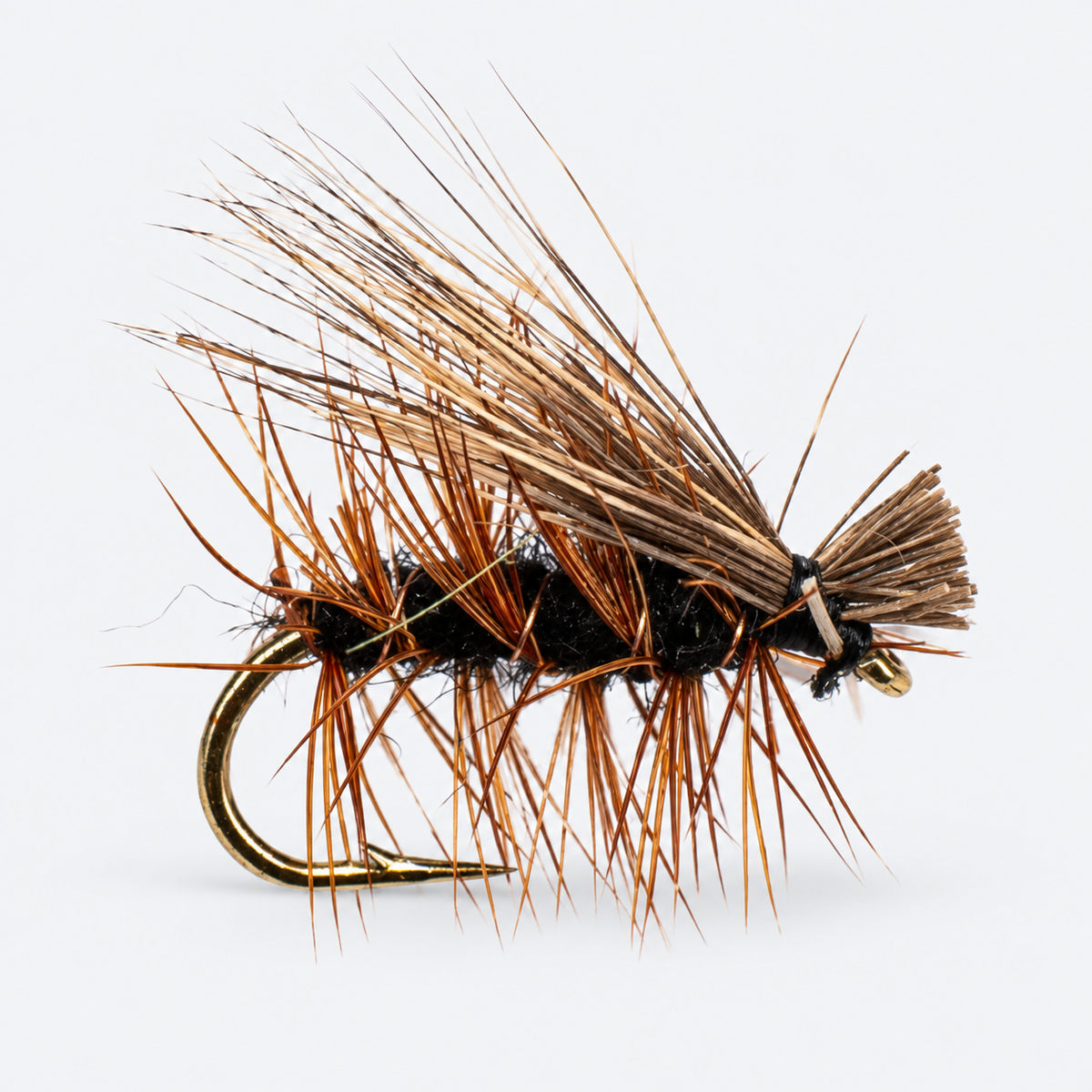
Photo guide: The gallery and component pictures are identification examples from our individual-fly listings, not a photograph of the assembled box. Photographs are not shown at a common physical scale. The labels below specify the included sizes and quantities.
| Fly | Color | Size | Flies included |
|---|---|---|---|
| Caddis Larva | tan | #14 | 3 |
| Caddis Larva | Olive | #14 | 3 |
| Caddis Pupa | No color option | #14 | 6 |
| Elk Hair Caddis | Brown | #16 | 2 |
| Elk Hair Caddis | Black | #16 | 2 |
| Elk Hair Caddis | Olive | #18 | 2 |


How to fish this selection
Follow the Feeding Stage
When nothing is rising
Begin with Caddis Larva, Olive #14, and Rig 1 in a reachable run with a current seam you can follow. Make several useful drifts through one lane before moving across the run. Watch the indicator for a pause, sideways change or movement that differs from its usual drift; lift smoothly when in doubt. Bottom contact can create the same signal, so use repeated snagging to diagnose excessive depth or weight, not as proof of bites.
Fish depth and drift come before a rapid sequence of colors. If the fly repeatedly rides above the intended layer, adjust the rig; if it drags on the bottom, reduce weight or shorten the indicator distance. Swap Olive #14 for tan #14 after you have a reasonable presentation, particularly when a safely observed larva suggests that color. This compares color without changing nominal size.
Read the transition without turning rises into a code
Watch several feeding events. Fish turning or bulging below untouched adults suggest food below the film. A mothlike caddis lifting away from a splash can mean a trout chased the emerging stage rather than ate a floating adult. Visible surface insects disappearing into a mouth support switching to the dry. None of these signs proves the stage by itself. Observation guidance.
Use Caddis Pupa #14 when the evidence supports caddis emergence or a subsurface pupa presentation. Edrington emphasizes that pupae can be fished at different depths; they are not restricted to the moment they reach the surface. Local guides also urge watching actual insects, including the folded, tentlike adult caddis wing. Pupa presentations; Western Rivers identification guidance.
Starting rig 1 — One caddis below an indicator
For an example run about three feet deep, connect floating line to a 9-foot tapered 5X nylon leader. Add 24 finished inches of 5X tippet with a double surgeon’s knot, then tie Caddis Larva, Olive #14 with a five-turn clinch. Nominal 5X diameter is 0.006 inch / 0.152 mm, and total leader length is about 11 feet. Leave extra material for knots, wet and seat them, then pull-test.
Begin with a removable non-toxic split shot of approximately 0.15 g, 12 inches above the fly, only if depth and current call for it. This is a trial mass, not a universal shot-number rule. Place an adjustable foam indicator 54 inches above the fly, measured along the leader: 42 inches above the shot and 30 inches above the tippet junction. Check that it supports the actual fly and shot. Current angles the leader, so those measurements do not promise a precise fishing depth. Use one fly; the dry is not the indicator in this setup.
For a pupa comparison, replace the larva with Caddis Pupa #14 using the same knot and first compare it at the existing depth. To explore a higher layer, remove the added shot and move the indicator to 30 inches above the fly. Check the fly’s actual sink rate in visible water; this does not guarantee suspension immediately below the film. Use an open-loop or water-loaded cast with the weighted version. Orvis nymph presentation.
Starting rig 2 — One adult caddis on the surface
Use the same 9-foot 5X leader and 24-inch 5X extension, joined with a double surgeon’s knot. Tie Elk Hair Caddis, Brown #16 with a five-turn clinch. Remove all shot and the indicator, replacing nicked tippet after unclamping shot. Use no second fly. The finished leader is about 11 feet.
Land the dry upstream of the feeding position with useful slack, then follow it without a wake. Black #16 changes color at the same nominal size; Olive #18 gives a smaller option while also changing color. If a #18 still drags after improving line control, consider a 24-inch 6X nylon extension, nominal 0.005 inch / 0.127 mm, using the same knots. Balance finer tippet against fish size, cover and abrasion. Double surgeon’s knot · Clinch knot.
Ordered adjustments after several unproductive drifts
- Check the lane. Put the fly through water the fish can intercept; shorten a difficult cast before changing tackle.
- Check drift and fouling. Remove weed, inspect the knot and hook, and correct line belly. Repeated snags mean the setup needs adjustment.
- Adjust depth, then weight. On Rig 1 move the indicator in 6-inch steps toward the line for more available depth or toward the fly for less. Hold other settings steady for a few drifts. Add or remove small shot increments only if the drift still misses the layer. These are changes in rig length and sink rate, not an exact depth formula.
- Change stage when observations support it. Larva → pupa uses the specified Rig 1 change. Visible adult takes call for the complete Rig 2 change, including removal of indicator and shot.
- Then compare the available size or color. tan/Olive larvae are both #14; the pupa has only the included #14 configuration. Adult choices are Brown #16, Black #16 and Olive #18.
- Move or use another selection. With good presentations and no response, inspect another lane or food source. Other insects may be more relevant. A three-stage caddis lesson does not mean every fishing day progresses neatly through those three stages.
Refill your selection
For the complete recipe without another box, choose the loose refill format at the top of this page. To replace only a few flies, use the exact individual-fly links in the contents table and choose your own quantities. Each option is a separate purchase; you do not need to add the complete refill and its individual components together.

Customers also bought
-
152-Piece Premium Fly Fishing Kit with Fly Box
Regular price $139.99 USDRegular price -
27-Pack Woolly Bugger Assortment
Regular price $39.99 USDRegular price -
12-Pack Sexy Walt's Worm
Regular price $18.99 USDRegular price -
12-Pack Zebra Midge
Regular price $16.99 USDRegular price


